
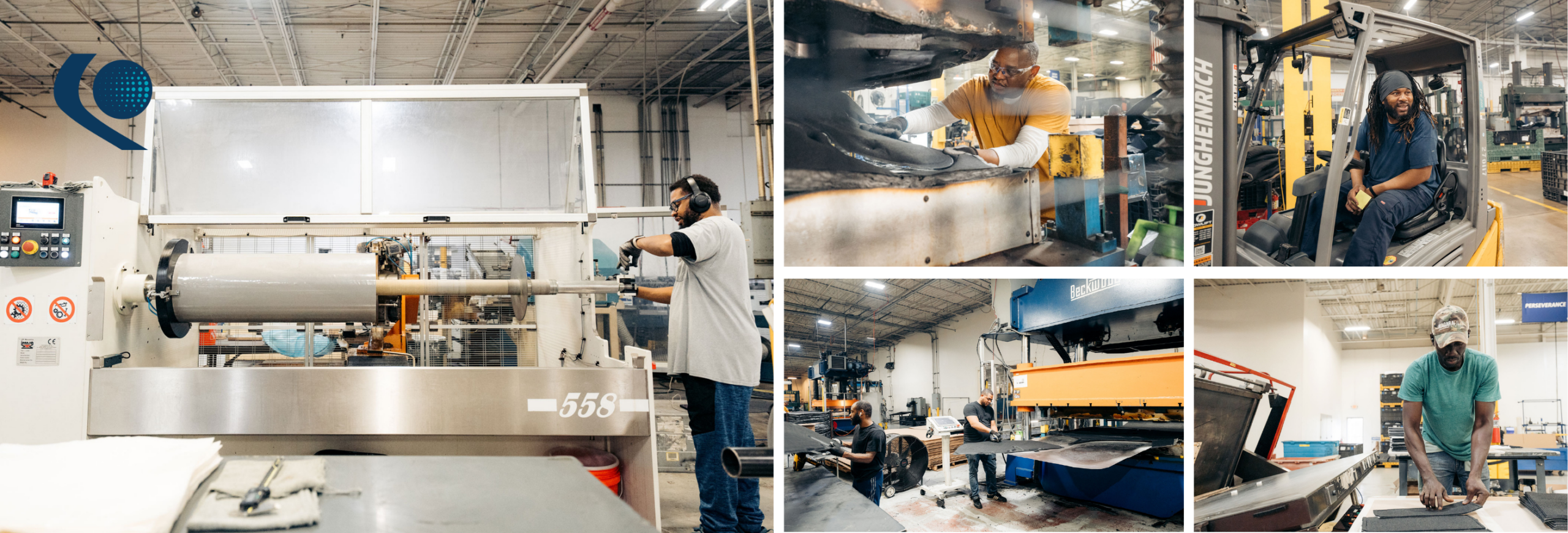
Choosing the wrong OEM manufacturing partner in Ohio can cost you more than a bad quarter. It can stall a platform launch, drive up defect rates, and expose your supply chain to risks that compound month after month.
Here is the thing: most procurement teams evaluate suppliers on price and lead time. Those matter. But the manufacturers who consistently outperform do something different. They evaluate for partnership quality, capability depth, and long-term supply stability.
This guide covers the seven criteria that separate a true custom manufacturing partner from a vendor who just fills purchase orders. By the end, you will know exactly what questions to ask, what red flags to look for, and how to run a rigorous contract manufacturer evaluation before you commit.
An OEM manufacturing partner is a contract manufacturer that produces components or assemblies to an OEM’s specifications, taking responsibility for material sourcing, process execution, quality control, and on-time delivery as an integrated extension of the OEM’s supply chain.
Why Most OEM Supplier Evaluations Miss the Mark
The standard RFQ process was designed for commodity purchasing. Send specs, collect quotes, pick the lowest number. That approach works well when you are buying fasteners. It breaks down fast when you are sourcing engineered components that require process expertise, tight tolerances, and consistent volume output.
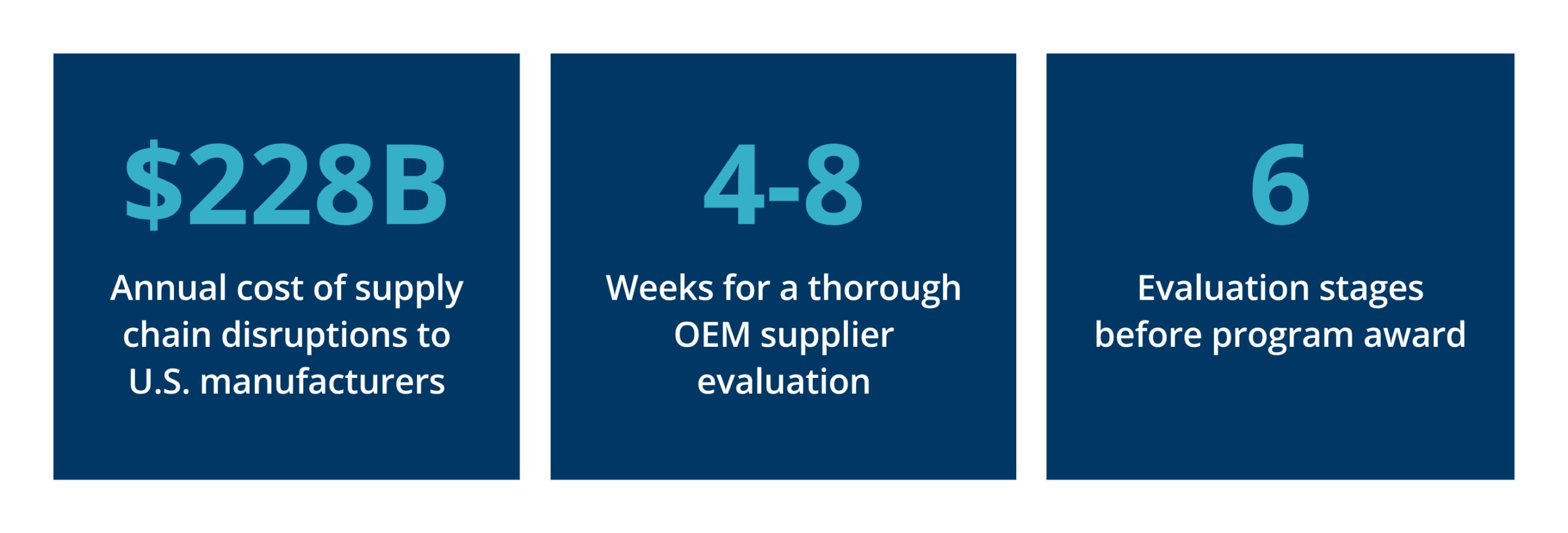
According to the National Association of Manufacturers, supply chain disruptions cost U.S. manufacturers an estimated $228 billion annually in lost revenue and recovery costs. A significant share of those disruptions trace back to supplier qualification decisions made on incomplete criteria.
1. Verify Process Capability Before Anything Else
The first question in any how to choose OEM manufacturer framework is simple: can they actually make what you need, at the volume you need it, to the tolerances you require?
This sounds obvious. But it is consistently where evaluations fall short. A supplier may have the equipment to run your part in prototype quantities. That does not mean they have the process control to maintain that quality at 50,000 units per month.
What to confirm during site visits and capability reviews:
- Equipment capacity at your required volume, not theoretical maximum
- Statistical process control (SPC) implementation on critical dimensions
- First-pass yield rates on comparable parts
- Scrap and rework rates by process area
- Tooling ownership and maintenance protocols
Ask for capability studies (Cpk data) on similar parts, not just sample runs. Suppliers who resist sharing this data are telling you something important.
2. Evaluate Quality Systems, Not Just Certifications
ISO 9001 certification is a floor, not a ceiling. It tells you a supplier has documented their processes. It does not tell you their processes are good.
A rigorous contract manufacturer evaluation goes deeper than the certificate on the wall. You want to understand how quality problems are surfaced, escalated, and resolved in real time.
Key quality indicators to assess:
- APQP (Advanced Product Quality Planning) process for new program launches
- PPAP (Production Part Approval Process) compliance history
- Corrective action response time and root cause quality
- Internal audit frequency and findings
- Customer scorecards from existing OEM accounts
The best single source manufacturing partners run quality as a system, not a department. Ask to speak with the quality manager directly, not just the sales team.
3. Assess Single Source Capability Across Multiple Processes
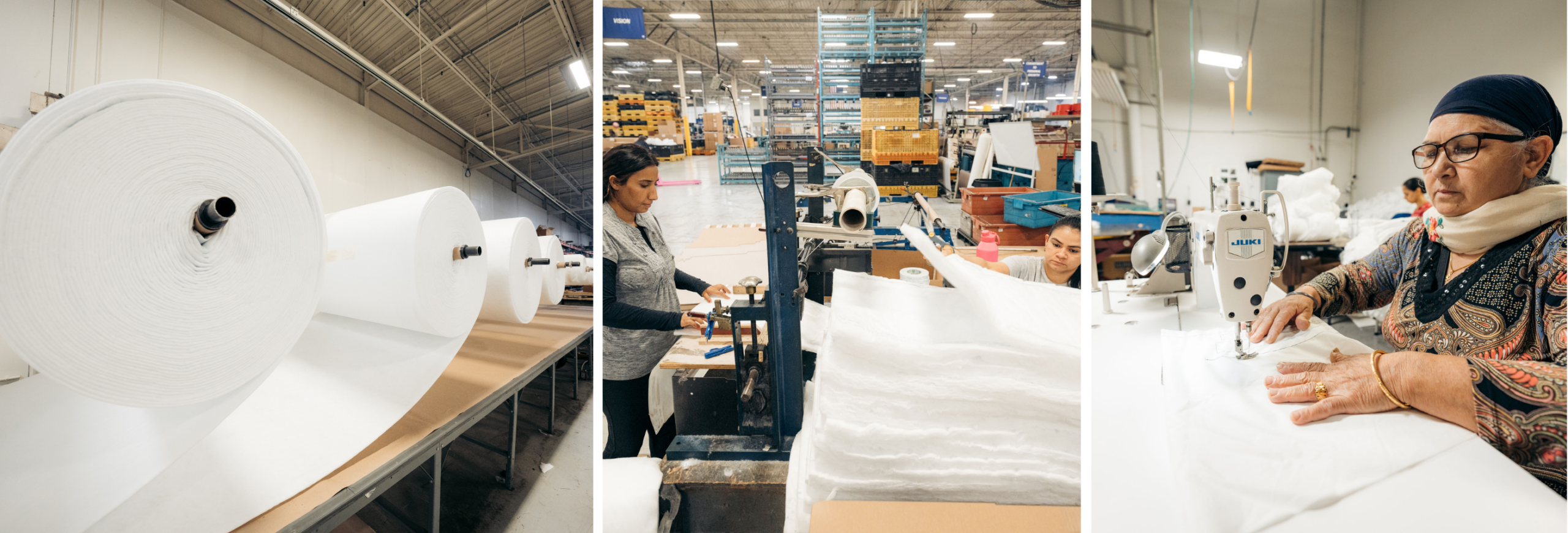
One of the most underrated criteria in OEM supplier selection is the ability to handle multiple manufacturing processes under one roof. Managing three vendors for one assembly creates three times the scheduling risk, three times the quality handoff points, and three times the communication overhead.
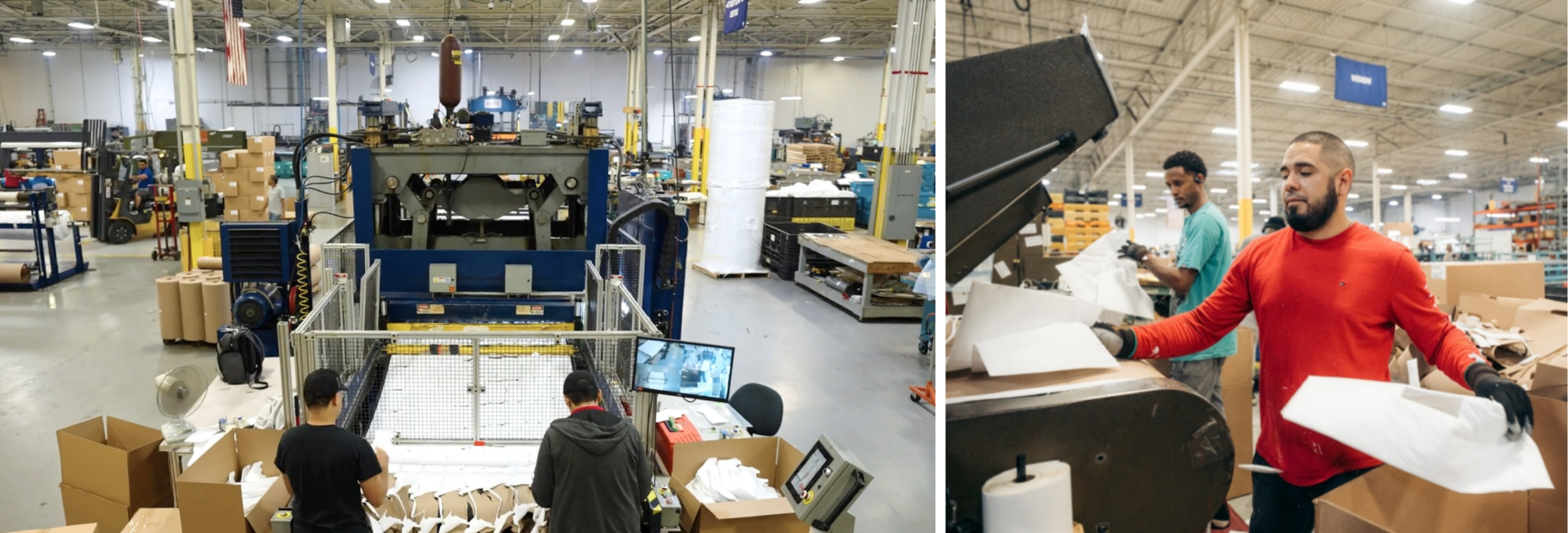
A capable single source manufacturing partner can take a component from raw material through conversion, molding, assembly, and finishing without handing it off to subcontractors you cannot audit.
Processes to look for under one roof:
- Material conversion and die cutting
- Compression molding and vacuum forming
- Sub-assembly and kitting
- Waterjet cutting and heat sealing
- Design and engineering support
When a supplier controls more of the value chain, you gain visibility, you shorten lead times, and you reduce the risk of defects that originate at handoff points between vendors.
4. Examine Supply Chain Stability and Material Access
A custom manufacturing partner automotive team should be asking hard questions about material sourcing during any evaluation. Raw material access, supplier relationships, and inventory strategy are often what separate a supplier who delivers during a disruption from one who goes quiet when things get hard.
In the automotive sector, where just-in-time schedules leave little room for buffer inventory, your supplier’s supply chain health is effectively an extension of yours.
Questions to ask:
- Who are your primary material suppliers, and what is your backup source?
- Do you carry safety stock, or do you run lean inventory on all materials?
- How did you perform during the supply disruptions of 2020 and 2021?
- Do you have preferred converter or distributor relationships that provide material priority?
A supplier with deep, long-standing material relationships can often get access during shortages that smaller or newer entrants cannot. That access becomes your competitive advantage when platforms launch on compressed timelines.
5. Demand Transparency on Capacity and Lead Times
One of the most common failure points in OEM supplier relationships is a supplier who oversells their capacity during the bid phase, then struggles to deliver once awarded. Protecting against this requires direct, specific capacity conversations before you sign anything.
What to verify:
- Current capacity utilization rate across relevant equipment
- Planned capital investments and equipment additions
- Average lead time on new tooling vs. production runs
- Peak season or program launch history and how they managed it
- Workforce stability and average employee tenure
6. Confirm Responsiveness and Communication Standards
Technical capability matters. But in day-to-day supply chain management, responsiveness is what keeps programs running. Slow communication on a quality escape, a material shortage, or a change request compounds quickly in a production environment.
Evaluate responsiveness during the sales and quoting process. How quickly do they return calls? How detailed are their quotes? Do they ask smart questions about your application, or do they just take dimensions and disappear?

Standards to set expectations around:
- Target response time for production inquiries (24 to 48 hours is reasonable)
- Dedicated account management or point of contact for your program
- Engineering support availability for design for manufacturability (DFM) reviews
- Executive accessibility when escalation is needed
The sales experience is a preview of the service experience. Evaluate both.
7. Align on Cultural Fit and Long-Term Partnership Mindset
This criterion is the hardest to quantify and one of the most predictive of long-term success. The best OEM supplier relationships work because both organizations think like partners, not like transactional vendors and customers.

Signs of a strong partnership mindset:
- Willingness to share process data and performance metrics openly
- Proactive communication about issues before they become your problem
- Investment in your program beyond the initial award, including capital and tooling
- History of growing with existing customers over time
- References from OEM accounts they have served for five or more years
Low employee turnover is a particularly strong signal. A manufacturer with an average employee tenure of 10 or more years has institutional knowledge embedded in their workforce. That knowledge shows up in quality and consistency in ways that certifications and equipment lists cannot measure.
How to Structure Your OEM Supplier Evaluation
Putting these criteria into a repeatable evaluation framework protects your organization from making decisions under time pressure that look different six months into production.
A practical evaluation sequence:
- Initial capability screening: confirm process match, certifications, and capacity range
- RFQ with technical package: evaluate quote quality, question depth, and timeline
- Site visit: verify equipment, process controls, quality systems, and workforce
- Reference check: speak directly with two to three current OEM accounts
- Pilot run: run a limited production sample with full quality documentation
- Program award: begin with defined success metrics and 90-day review checkpoint
Suppliers who perform well through all six stages are the ones worth building long-term supplier relationships around. Shortcuts at any stage tend to surface as production problems later.
Conclusion
Selecting the right OEM manufacturing partner in Ohio means going beyond the quote sheet. The seven criteria covered in this guide, from process capability and quality systems to cultural fit and supply chain stability, give you a complete picture of what a supplier can actually deliver under real production conditions.
The single-source manufacturing partner who earns a long-term relationship is the one who is transparent about their limits, invested in your success, and capable of scaling with you as your programs grow.
If you are evaluating manufacturing partners for an upcoming platform launch or looking to consolidate your supply base, start with a capability conversation. The right partner will ask as many questions as you do.
Frequently Asked Questions
What is the difference between an OEM manufacturer and a contract manufacturer?
An OEM manufacturer produces components specifically to a customer’s design and specifications. A contract manufacturer may do the same, but the term is broader and can include custom or standard catalog production. In practice, the best OEM manufacturing partners function as contract manufacturers with deep OEM-specific process expertise, quality standards, and supply chain integration.
How long should an OEM supplier evaluation take?
A thorough contract manufacturer evaluation typically takes four to eight weeks for a new supplier relationship, including site visits and pilot production. Compressed timelines are possible, but they increase risk. For critical components, invest in the full evaluation process before the award.
What certifications should an OEM manufacturing partner have?
ISO 9001 is the baseline. Automotive suppliers should also look for IATF 16949 compliance for quality management systems. Additional certifications like ISO 14001 (environmental management) and AS9100 (aerospace) may be relevant depending on the industry. Certifications confirm process documentation. They do not replace direct performance verification.